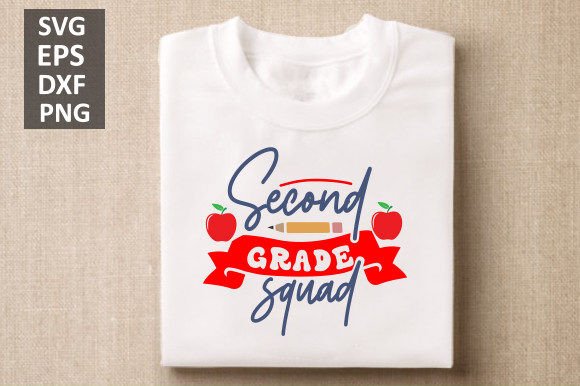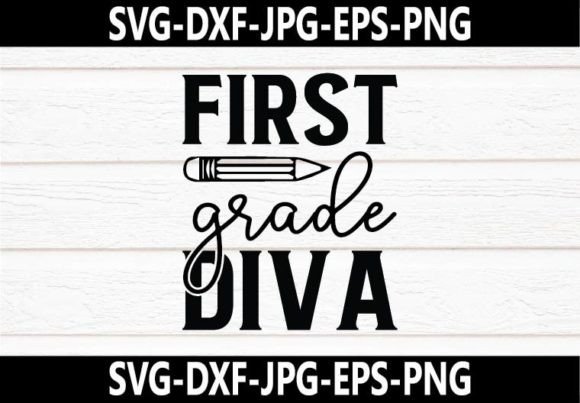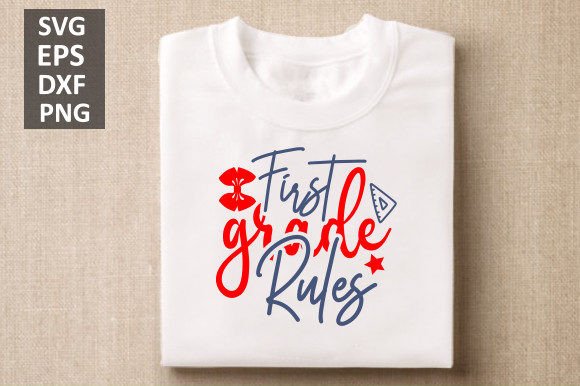
First Grade Rules SVG Design: Smart Choices for Creators and Educators
Whether you're a teacher prepping classroom signs, a small business owner designing back-to-school merchandise, or a hobbyist personalizing tumblers and tees, a First Grade Rules SVG Design offers versatile, classroom-friendly charm. These vector-based files aren’t just decorative—they’re functional tools that scale cleanly, adapt to color schemes, and integrate smoothly across cutting machines, print workflows, and digital platforms. But not all designs deliver the same reliability—and choosing poorly can cost time, materials, or even customer trust.
What Makes a First Grade Rules SVG Design Actually Useful?
A high-quality First Grade Rules SVG Design goes beyond cute fonts and clipart-style graphics. It’s built with precision: clean anchor points, properly grouped layers, consistent stroke weights (if applicable), and intentional spacing between letters and rules. The best versions include multiple file formats—SVG for Cricut and Silhouette, DXF for older cutters, EPS for professional print prep, PNG with transparent backgrounds for quick overlays, and ready-to-print PDFs. Most importantly, it’s truly editable: colors change in seconds, text remains live or is outlined thoughtfully, and resizing doesn’t distort proportions.
Common Oversights That Undermine Your Project
Many buyers assume “SVG” means “plug-and-play”—but that’s where real-world hiccups begin.
Assuming All SVG Files Are Cut-Ready
Some sellers label raster-heavy or poorly traced designs as “SVG,” even though they contain embedded bitmaps or ungrouped, overlapping shapes. When imported into Cricut Design Space or Silhouette Studio, these may fail to slice correctly, produce jagged edges, or refuse to weld. One educator reported spending 45 minutes troubleshooting a “First Grade Rules SVG Design” only to discover it was a flattened PNG masquerading as vector art. Always preview the actual SVG code (open in a text editor) or test the file in your software before applying it to vinyl or fabric.
Overlooking Color Flexibility in Practice
“100 color changeable” sounds impressive—until you open the file and find solid black fills locked inside compound paths or text converted to outlines with no fill layer exposed. True color adjustability means each rule or icon has its own selectable object, not one merged blob. A better approach? Look for layered previews in the product images or ask the seller for a screenshot of the Layers panel in Illustrator. If they provide it willingly—and it shows named, independent elements—you’re likely getting thoughtful design, not just packaging.
Misjudging Scale Across Applications
A design sized perfectly for an 8.5" × 11" printable sign may overwhelm a 20 oz tumbler or vanish on a nursery wall mural. Since every First Grade Rules SVG Design is fully vector-based, scaling *is* possible—but only if the original file respects typographic hierarchy and spacing. Poorly spaced lettering compresses awkwardly at small sizes; overly thin strokes disappear when enlarged. Before printing or cutting, test your design at *both* intended minimum and maximum sizes in your software. Adjust tracking or stroke width manually if needed—don’t rely solely on automatic scaling.
Real-World Uses—And What to Verify First
This isn’t just for bulletin boards. Educators use these files for behavior charts and morning meeting visuals. Small batch apparel makers apply them to kids’ tees and parent-teacher conference tote bags. Home decor creators turn them into wooden palette signs or framed classroom quotes. Even bloggers embed clean PNG versions into free downloadable resources.
Before downloading or purchasing, check three things:
- File structure: Open the ZIP and confirm it contains *all* promised formats—not just SVG. Missing DXF or EPS files mean extra conversion work (and potential quality loss).
- Transparency handling: Load the PNG into Photoshop or Canva. Does the background stay fully transparent, or does it show a faint white halo? Halo = poor export; avoid for layered projects.
- Licensing clarity: Does the listing specify commercial use? Many “personal use only” designs get quietly repurposed for Etsy shops or school PTA fundraisers—risking takedowns or lost sales if flagged.
Better Alternatives to Generic Downloads
If you’ve ever opened a “back to school SVG bundle” and found mismatched fonts, inconsistent line weights, or rules that don’t align visually—it’s not your software. It’s underdeveloped source art. Instead of settling, look for designers who:
- Provide real-life mockups (not just flat previews) showing how the First Grade Rules SVG Design looks on mugs, shirts, and chalkboard prints;
- Include optional variations—like simplified icons for younger learners or editable checkboxes for behavior trackers;
- Offer responsive support: a quick reply confirming whether their files work with Glowforge, Cricut Joy, or Brother ScanNCut.
One small business owner switched from bargain bundles to a single well-documented First Grade Rules SVG Design and cut her prep time by 60%. She stopped re-tracing outlines and started shipping coordinated first-day kits—tote, sticker sheet, and mini poster—all pulled from one scalable source.
Final Thought: Quality Isn’t Just About Looks
A great First Grade Rules SVG Design saves more than time—it builds consistency. When your classroom door sign, student name tags, and hallway display all share the same balanced weight, spacing, and tone, students subconsciously absorb cohesion and care. That impression matters more than perfect kerning alone.
So before you click “add to cart,” ask: Does this file respect my workflow—or will I spend more time fixing it than using it? Does it reflect how real first graders learn (clear, friendly, visually supportive)—or just how “cute” someone thinks schooling should look? Choose the version built for doing, not just displaying. Because the best back-to-school tools don’t shout. They serve—quietly, reliably, and ready to grow with you.