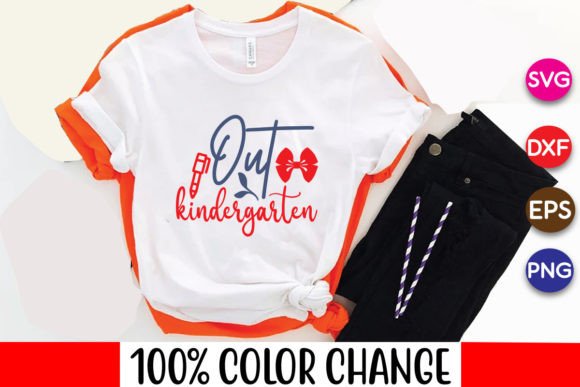
Out Kindergarten SVG: A Practical Evaluation for Crafters and Educators
Out Kindergarten SVG refers to a digital vector design package themed around the transition from kindergarten—often used for “back to school” celebrations, milestone markers, or classroom decor. It is not software or a physical product, but a collection of scalable, editable graphic files intended for use with cutting machines (like Cricut or Silhouette), design software (such as Adobe Illustrator or Inkscape), or print-on-demand platforms.
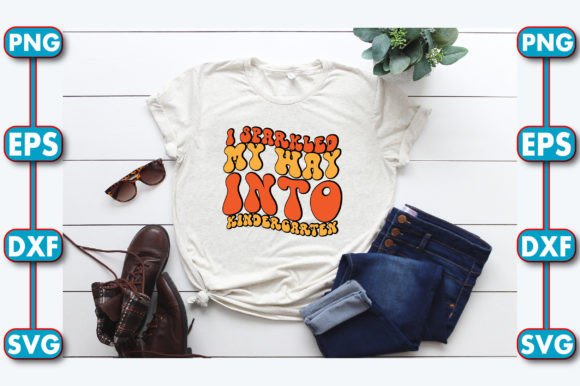
The package includes multiple file formats—SVG, EPS, PNG with transparency, DXF, and a ZIP archive—making it compatible across a range of tools and workflows. Each design supports 100 color changes, meaning users can adjust hues without altering outlines or structure. The files are vector-based, so they retain clarity at any size, from a small tumbler decal to a large wall sign.
Why Someone Might Consider Out Kindergarten SVG
Individuals often seek Out Kindergarten SVG for tangible, hands-on applications—not just aesthetic appeal. Educators may use it to create classroom welcome signs or graduation-style keepsakes marking the end of a child’s kindergarten year. Parents or caregivers might choose it for personalized gifts: custom T-shirts for a “graduating” kindergartener, framed wall art for a child’s room, or labels for school supplies. Small business owners producing handmade goods—especially those focused on education-themed merchandise—also evaluate this design for its versatility in production.
Unlike generic clipart or stock illustrations, Out Kindergarten SVG is built for functional output: it’s pre-optimized for cutting machines, includes layered transparency for multi-material projects (e.g., vinyl layering), and avoids raster-dependent elements that degrade when resized.
Key Benefits and Realistic Expectations
The primary benefit lies in format flexibility. SVG and EPS files allow editing in professional vector editors; PNG files support quick drag-and-drop use in simpler tools like Canva; DXF ensures compatibility with certain CAD or laser-cutting software. This breadth reduces the need to convert files manually—a common pain point for beginners.
Scalability is another consistent advantage. Because vectors are mathematically defined, enlarging the design for a 24-inch wooden sign introduces no pixelation or loss of edge precision. Similarly, shrinking it for a 2-inch enamel pin retains clean lines—provided the original design was well-constructed (which this package appears to be, based on file structure and layer organization).
Color changeability—specifically the ability to modify up to 100 individual elements—is useful for branding consistency or personalization. For example, a daycare center could match the design to its existing color palette; a parent could coordinate shirt colors with a child’s favorite hues. However, this feature assumes familiarity with vector-editing tools. Users relying solely on machine software (e.g., Cricut Design Space) may find color adjustments limited to grouped layers rather than granular elements.
Practical Considerations and Tradeoffs
While the file variety is an asset, it also implies a learning curve. Not all users need or will use every format. Someone printing directly onto cardstock may only require the PNG or PDF version; a vinyl cutter operator may prioritize SVG or DXF. Understanding which format suits a given tool—and how to import it correctly—is essential before purchase.
“Ready to print” does not mean “ready to use without adjustment.” Some printers or cutting machines require specific bleed settings, color profiles (CMYK vs. RGB), or outline expansion. Users should verify compatibility with their hardware and software versions. For instance, older versions of Silhouette Studio may not fully support newer SVG specifications without manual conversion.
Transparency in the PNG file is helpful for overlay work, but it doesn’t replace vector precision for cutting. If the goal is to cut vinyl lettering or iron-on transfers, the SVG or DXF remains the appropriate choice—even if the PNG looks visually identical on screen.
Situations Where Out Kindergarten SVG Is a Strong Fit
This design works well when the user has a defined output path and moderate familiarity with digital design tools. Examples include:
- An educator preparing end-of-year classroom decorations using a Cricut Maker and permanent vinyl.
- A small batch producer creating personalized tumblers with sublimation or heat-transfer vinyl.
- A parent making coordinated family shirts for a kindergarten graduation photo session.
- A freelance designer building a client’s back-to-school campaign assets and needing layered, editable source files.
In each case, the combination of scalability, format options, and color control supports efficient iteration and reuse—reducing time spent rebuilding similar graphics from scratch.
When Alternatives May Be More Appropriate
Out Kindergarten SVG may be less suitable for users who need highly customized illustration—such as adding unique names, photos, or complex typography beyond basic text replacement. While the files allow edits, they aren’t inherently “plug-and-play” for advanced personalization without vector knowledge.
Those seeking strictly printable PDFs for immediate home printing—without cutting, layering, or color modification—might find simpler, lower-cost PNG bundles sufficient. Likewise, educators needing bulk-use licenses for institutional printing (e.g., district-wide handouts) should confirm licensing terms, as most SVG packages are licensed for personal or single-business commercial use—not enterprise redistribution.
For users prioritizing animation, web interactivity, or responsive display (e.g., embedding in a website), SVG files alone don’t guarantee functionality—additional coding or optimization may be needed, which falls outside the scope of this design package.
Making a Practical Decision
To determine whether Out Kindergarten SVG aligns with your needs, start by clarifying your intended use case: What will you make? With what tools? For whom? If your workflow involves cutting machines, layered vinyl, or scalable signage—and you value consistent quality across sizes—this package delivers appropriate technical foundations.
If your priority is speed over customization (e.g., generating dozens of name-customized tags in under five minutes), look for designs with built-in text fields or templates optimized for your specific software. If your tools are limited to mobile apps or basic online editors, verify that the included PNG or SVG versions load and scale predictably within those environments.
Finally, assess your comfort level with vector editing. The ability to isolate and recolor elements enhances utility—but isn’t required for basic use. Many users successfully apply these files using only the default settings in cutting-machine software, treating the SVG as a single-layer template.
Out Kindergarten SVG offers a balanced set of features for practical, repeatable production. Its value emerges not from novelty, but from execution: clean vectors, thoughtful format coverage, and adaptability across common craft and education-related applications. As with any digital design asset, its usefulness depends less on what it includes—and more on how closely its capabilities match your tools, timeline, and goals.