Ready to Tackle Third Grade: A Practical Design Resource for Back-to-School Creativity
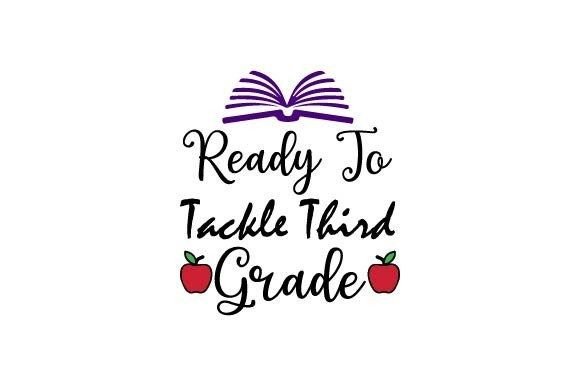
“Ready to Tackle Third Grade” is a thoughtfully crafted digital design intended to mark a meaningful academic milestone — the transition into third grade. Unlike generic back-to-school graphics, it carries thematic intention: confidence, readiness, and growth. Visually, it balances playful energy with clean typography and age-appropriate illustration elements — think bold lettering, subtle educational motifs (like pencils, books, or stars), and a color palette that feels vibrant yet not overwhelming. Its strength lies in versatility: it’s not just an image, but a production-ready asset built for real-world application across physical and digital projects.
What Makes This Design Distinct Beyond Aesthetics
Many school-themed designs prioritize cuteness or simplicity — which works well for kindergarten or first grade — but “Ready to Tackle Third Grade” meets a different developmental moment. Third grade introduces more complex learning expectations: multiplication, paragraph writing, science inquiry, and increased independence. The design reflects that shift without leaning into childishness. It avoids cartoonish characters or overly cutesy fonts, instead opting for clarity and quiet confidence. That nuance matters when selecting assets for gifts, classroom decor, or student-owned items — it signals respect for the child’s growing identity as a learner.
Equally important is its technical execution. The package includes SVG, DXF, PNG with transparent background, and EPS files — formats chosen for functional compatibility rather than marketing convenience. SVG preserves scalability for web use or large-format printing; DXF and EPS support precision in vector-based workflows; PNG transparency enables effortless layering over photos or textured backgrounds. This breadth means users aren’t forced to convert files or sacrifice quality depending on their toolset or output method.
Fitness for Purpose: Where This Design Excels
“Ready to Tackle Third Grade” performs best in contexts where personalization, durability, and clear messaging matter. For example:
- T-shirts and tote bags: The clean lines and balanced negative space ensure crisp results even with basic heat-transfer vinyl or screen printing — no fine-detail loss at common sizes (e.g., chest print or bag front).
- Backpacks and lunchboxes: Its moderate width and vertical proportion fit standard label or patch placements without awkward cropping or scaling compromises.
- Classroom displays or teacher appreciation gifts: When printed on matte cardstock or mounted on wood, the design reads clearly from across a room and conveys warmth without sentimentality.
- Digital use: The transparent PNG allows seamless integration into newsletters, digital report cards, or virtual classroom banners — especially helpful for hybrid or remote learning environments.
This isn’t a one-size-fits-all graphic. Its intentional focus on third grade means it doesn’t try to stretch across multiple grade levels — a tradeoff that becomes an advantage when authenticity matters. If you’re creating a gift for a specific third grader, or designing a welcome kit for a third-grade team, that specificity adds resonance.
How It Compares With Broader Alternatives
When evaluating school-themed design resources, users often encounter three general categories: generic back-to-school bundles, grade-agnostic motivational phrases, and custom-illustrated scene-based artwork. Each serves different needs.
Generic bundles — like “First Day of School” or “Back to School 2024” collections — offer variety but rarely capture grade-specific significance. They may include clipart-style apples or chalkboards, useful for broad campaigns but less meaningful for milestone-focused gifting. “Ready to Tackle Third Grade” fills a gap those bundles leave: targeted recognition.
Grade-agnostic phrases (“I’m Ready to Learn”, “Scholar in the Making”) are flexible and timeless, but they lack the contextual grounding that helps children feel seen. A third grader receiving a mug with “Ready to Tackle Third Grade” understands immediately that this item was chosen *for them*, at *this stage*. That small distinction supports identity development and belonging — something educators and caregivers increasingly value in tangible ways.
Custom scene-based illustrations (e.g., a detailed classroom vignette) offer high visual appeal but often pose practical limitations: complex layers can complicate cutting-machine workflows, and busy compositions don’t scale down well for small applications like keychains or pencil toppers. “Ready to Tackle Third Grade” prioritizes legibility and adaptability over decorative density — making it more reliably usable across diverse fabrication methods and product types.
Practical Considerations and Limitations
Like any focused resource, “Ready to Tackle Third Grade” has natural boundaries. It is not intended for multi-grade classrooms unless paired intentionally with complementary designs. It does not include editable text layers beyond the core phrase — so if you need to swap “Third Grade” for “Fourth Grade”, you’d need design software and font licensing awareness. It also doesn’t include alternate color palettes or seasonal variants (e.g., “Ready to Tackle Third Grade — Winter Edition”), which some users might prefer for extended reuse.
Compatibility is strong with Cricut Design Space, Silhouette Studio, and Brother ScanNCut software — all tested with the included SVG and DXF files. However, users working in older versions of Adobe Illustrator or CorelDRAW should verify EPS import behavior, as legacy software sometimes renders embedded effects inconsistently. The PNG version functions universally but isn’t editable in vector form — important to note if future modifications (e.g., resizing individual letters) are part of your workflow.
When to Choose This Design — and When to Look Elsewhere
Choose “Ready to Tackle Third Grade” if:
- You’re preparing a personalized gift for a child entering third grade — whether as a parent, grandparent, or educator.
- Your project involves physical production (cutting, printing, embroidery) and requires reliable vector and transparent raster files.
- You value thematic accuracy over stylistic variety — and want a design that aligns with how third grade is experienced, not just how it’s marketed.
- You’re building reusable classroom resources and need consistent, professional-looking assets that avoid infantilizing language or imagery.
Consider alternatives if:
- You need a single design to serve grades 1–5 — in which case a modular system (e.g., interchangeable grade numbers with consistent styling) may be more efficient long-term.
- Your priority is photorealistic illustration or highly detailed scenes — this design favors clarity and reproducibility over ornamental complexity.
- You require multilingual support (e.g., Spanish or bilingual versions) — the current file set is English-only.
- You’re sourcing assets for commercial resale with extended license rights — always verify usage terms, as standard licenses typically cover personal and limited small-business use, not mass redistribution.
Making It Work Across Real Projects
In practice, users report success applying “Ready to Tackle Third Grade” in layered ways. One homeschooling parent combined the SVG with a simple starburst shape (created in Silhouette Studio) to make iron-on patches for a custom backpack. A PTA group used the PNG file to overlay onto class photos for end-of-year memory books — the transparency preserved skin tones and background details. A third-grade teacher printed the EPS version at poster size, laminated it, and hung it beside her door as a daily visual cue during the first month of school.
None of these uses required advanced design skills — just awareness of file strengths and alignment with purpose. That balance of accessibility and fidelity is what makes this design both practical and enduring across use cases, tools, and audiences.