Working with Cutting EDGE Technology: What It Means for Arborists and Chainsaw Enthusiasts
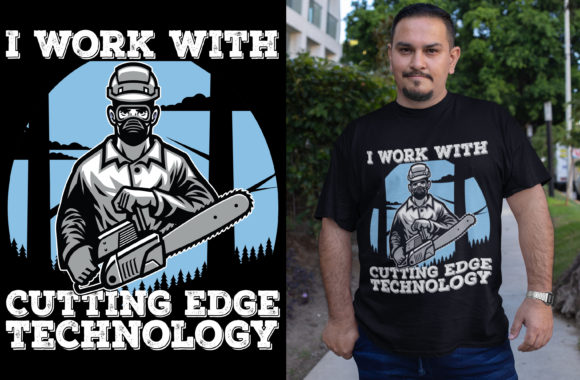
“Working with Cutting EDGE Technology” isn’t just a slogan—it’s a design philosophy rooted in function, durability, and identity. In the context of apparel for arborists and chainsaw users, it reflects a deliberate fusion of occupational authenticity and thoughtful garment engineering. Unlike generic outdoor or workwear graphics, shirts branded with this phrase signal familiarity with the precision, risk, and craftsmanship inherent in modern arboriculture. The phrase itself plays on dual meaning: “edge” as both a literal cutting surface and a metaphor for innovation, while “cutting edge” nods to technical advancement—whether in chainsaw design, climbing systems, or safety standards.
How This Differs from Standard Workwear or Hobbyist Apparel
Most chainsaw-themed clothing falls into one of two categories: cartoonish novelty wear (think exaggerated saws, fire motifs, or loud slogans) or utilitarian gear stripped of personality. Working with Cutting EDGE Technology occupies a middle ground—visually grounded but intentionally expressive. The typography is clean and legible at a distance, the color palette favors high-visibility contrasts without sacrificing wearability, and the graphic layout avoids clutter. That balance matters when selecting apparel for real-world use—not just for backyard pruning, but for daily rigging, storm response, or client-facing site assessments.
This distinction becomes clearer when comparing fit and fabric. Many mass-market “arborist” tees use standard retail cuts and 100% cotton blends that shrink, fade, or lose shape after repeated washes and field use. In contrast, garments aligned with Working with Cutting EDGE Technology typically prioritize performance-oriented blends—like 60% cotton/40% polyester—that retain structure, wick light moisture, and hold print integrity across seasons. They’re not technical outer layers, but they’re engineered to endure more than casual wear.
Fitness for Purpose: When It Makes Sense—and When It Doesn’t
A shirt labeled “Working with Cutting EDGE Technology” serves best when identity, practicality, and subtle professionalism intersect. For example:
- An arborist meeting municipal forestry staff may choose it over overtly humorous designs to project competence without appearing corporate.
- A weekend tree-care volunteer wearing it during community cleanup events signals shared values—safety awareness, equipment respect, environmental stewardship—without requiring explanation.
- Parents or partners of arborists often appreciate the phrase as a quiet nod to the complexity of the work—not just “chainsaw guy,” but someone engaged with evolving tools, training, and ethics.
That said, it’s not universally optimal. In highly regulated environments—such as utility line clearance or certified ISA Tree Risk Assessment Qualification (TRAQ) work—high-visibility ANSI-compliant apparel remains non-negotiable, and logo-driven tees like this serve better as off-duty or training-day wear. Similarly, individuals prioritizing extreme breathability for summer canopy work may prefer lightweight mesh polos or purpose-built cooling fabrics over even optimized cotton-blend tees.
Who Benefits Most from This Style of Apparel?
The appeal extends beyond job title. Consider these realistic use cases:
- Arborist educators and trainers: Use such shirts during demonstrations to reinforce concepts like proper chain tension, bar maintenance, or kickback prevention—linking visual identity to teaching moments.
- Women in arboriculture: Sizing inclusivity and cut-specific tailoring (e.g., shaped hems, narrower shoulders) make versions marketed toward women more than aesthetic choices—they affect mobility, layering, and long-term comfort during climbs or extended ground work.
- Families and supporters: Gifting a “Working with Cutting EDGE Technology” shirt to a parent, sibling, or mentor acknowledges their craft without reducing it to caricature. It works because it respects the work first, fun second.
This is especially relevant during seasonal gifting windows—Christmas, birthdays, or Back to School (for arborist certification programs). Unlike trend-dependent designs that age quickly, the phrase carries staying power: it doesn’t rely on memes, slang, or fleeting aesthetics. It reads clearly in 2024 and will likely still resonate in 2028.
Tradeoffs to Acknowledge Honestly
No apparel choice is without compromise. Here’s what to weigh:
- Print longevity vs. softness: Some versions use plastisol inks for bold, durable graphics—but those can feel stiff initially and may crack after many wash-and-dry cycles. Water-based inks offer softer hand-feel and better breathability but may fade faster under UV exposure (e.g., hanging on a garage hook all summer).
- Sizing consistency: Because fit varies across manufacturers—even within the same brand’s “arborist line”—checking actual measurements (not just small/medium/large labels) prevents disappointment. A “relaxed fit” tee from one supplier may mirror a “standard fit” from another.
- Color limitations: High-contrast options (black/white, navy/orange) maximize readability of the phrase, but lighter shades (heather grey, oatmeal) may suit those wanting subtlety—though ink opacity and fabric texture interact differently there.
Also worth noting: while the phrase resonates strongly with North American arborists familiar with ISA standards and ANSI Z133 safety protocols, its meaning may require context internationally. In regions where “arborist” denotes ornamental pruning rather than hazard mitigation or utility clearance, the phrase could read as overly technical—or conversely, too vague.
Comparing Contexts: Where It Fits in the Broader Landscape
Think of Working with Cutting EDGE Technology apparel as one option among several functional categories:
- Safety-first gear: Hi-vis vests, FR-treated shirts, and helmet-compatible headwear address regulatory and physical risk directly. This shirt complements—not replaces—those items.
- Branded employer apparel: Company-logo polos or jackets build team cohesion and client recognition. A “Working with Cutting EDGE Technology” shirt offers personal branding, useful for freelancers, instructors, or consultants building individual credibility.
- Casual hobbyist wear: For those who use chainsaws recreationally (e.g., firewood processing, land clearing), it bridges the gap between “I know what I’m doing” and “I take this seriously”—without needing certification badges or jargon-heavy slogans.
In essence, it’s less about replacing other categories and more about occupying a specific communicative niche: professional pride without pretension, enthusiasm without exaggeration, and identity without irony.
Making an Informed Choice
If you’re evaluating whether a “Working with Cutting EDGE Technology” shirt suits your needs, ask yourself:
- Do I wear it where visibility and clarity matter—on-site, at workshops, or in photos representing my work?
- Will the fabric and fit support how I actually move and work—not just how I imagine myself working?
- Does the phrase reflect how I want others to perceive my relationship to this craft? (e.g., as skilled, evolving, safety-conscious, or community-oriented)
- Am I choosing it for durability, identity, gifting, or a mix—and does the version I’m considering align with those priorities?
There’s no universal “best” shirt. But when the phrase “Working with Cutting EDGE Technology” appears on apparel built with attention to construction, context, and audience, it signals something tangible: intentionality. Not every chainsaw shirt earns that weight—and that’s precisely why understanding the distinction matters.