My Teacher Survived 100 Days of Me: A Typography Design Built for Real-World Flexibility
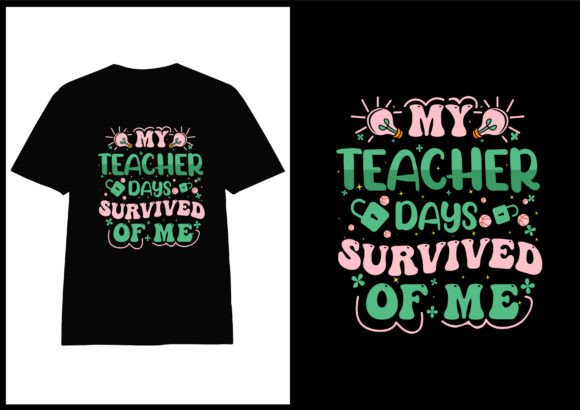
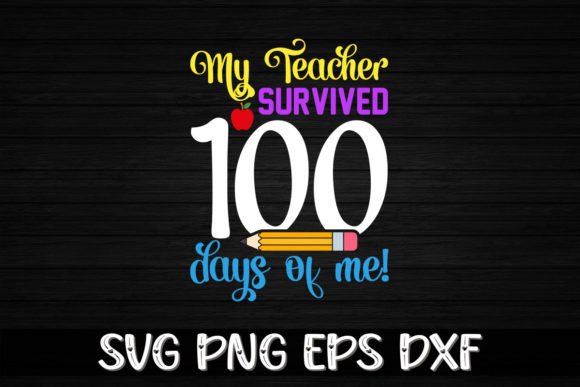
Typography isn’t just about letters on a shirt—it’s about resonance, recognition, and readiness. When a phrase like My Teacher Survived 100 Days of Me lands with authenticity, it does more than spark a smile; it communicates shared experience, quiet respect, and lighthearted resilience. That’s why this particular typographic t-shirt design has become a quietly powerful staple in back-to-school collections, educator appreciation campaigns, and student-led gift initiatives—not because it’s trendy, but because it’s *usable*, *adaptable*, and deeply human.
Why This Design Works Beyond the Classroom
At first glance, My Teacher Survived 100 Days of Me reads as a playful student confession. But its utility extends far beyond school hallways. Designers integrate it into welcome kits for new hires in high-turnover service roles. Counselors use modified versions (with permission and context) in youth development workshops to open conversations about growth and mutual accountability. Small business owners print it on staff tees during “Teacher Appreciation Week” at tutoring centers or after-school programs—reinforcing culture without cliché.
The strength lies in its dual-layered meaning: it honors effort while acknowledging imperfection. Unlike generic slogans (“World’s Best Teacher”), it invites specificity. A fifth-grade teacher wearing it signals not just pride, but earned credibility. A parent buying it for their child’s homeroom teacher signals they see the labor behind the lesson plan. That nuance makes the design functionally versatile—and commercially durable.
Vector Precision Meets Practical Production Needs
This isn’t a raster image stretched across a mockup. The My Teacher Survived 100 Days of Me typographic t-shirt design is built entirely from vector shapes—meaning every curve, serif, and spacing decision exists as mathematically defined paths. That distinction matters in practice:
- Scalability without compromise: Whether printed on a toddler-sized onesie or a 36″×48″ event banner, edges remain razor-sharp. No pixelation, no reworking.
- Color adaptation that’s truly intuitive: With 100% color-changeable elements, swapping the navy text for gold foil on charcoal fabric—or reversing to white text on black cotton—takes seconds in Illustrator, not hours of layer masking.
- Cross-platform compatibility: The inclusion of AI, EPS 10, SVG, DXF, and PNG formats means the same core artwork serves screen printing shops (EPS), embroidery digitizers (DXF), web storefronts (SVG/PNG), and automated POD platforms (all formats).
That level of technical preparedness reflects an understanding of real production workflows—not just design theory. Print providers don’t need to troubleshoot outlines or convert fonts. Educators ordering bulk runs for PTA events don’t need graphic design training to adjust colors for their school’s palette. The file works where it’s needed, how it’s needed.
Back-to-School, But Not Just for September
While often associated with August and early September launches, demand for this design remains steady year-round—and for good reason. It surfaces during:
- End-of-year celebrations: Students gift teachers after final exams, pairing the shirt with handwritten notes reflecting on growth over the semester.
- Professional development cohorts: New teacher induction programs use it to foster camaraderie—“We’ve all survived our first 100 days” becomes a unifying motif.
- Community literacy initiatives: Libraries and nonprofits order custom batches for volunteer tutors, reinforcing that teaching happens everywhere—not just in classrooms.
- Student-run enterprises: High school entrepreneurship classes produce and sell the shirts as part of real-world marketing units, learning inventory, pricing, and audience targeting firsthand.
In each case, the design doesn’t require explanation. Its phrasing carries cultural shorthand understood across generations—making it efficient for time-strapped educators, cost-conscious PTAs, and mission-driven organizations alike.
Design Integrity Without Creative Limitation
A common misconception is that “ready-to-print” implies rigidity. In contrast, this My Teacher Survived 100 Days of Me vector design prioritizes creative autonomy. Because it’s constructed from editable shapes—not outlined text or flattened layers—users can:
- Adjust letter-spacing to tighten or breathe the phrase for different garment widths;
- Isolate individual words (e.g., “Survived”) to scale them up for emphasis or visual hierarchy;
- Swap type treatments—replacing the default sans-serif weight with a subtle slab-serif for gravitas, or a rounded variant for younger audiences—without losing vector fidelity;
- Integrate complementary icons (a chalkboard icon, a tiny apple, a graduation cap) using the same color swatches and alignment guides.
This flexibility supports diverse brand voices. A Montessori school might soften the tone with warm earth tones and organic line weights. An urban STEM academy could pair it with bold geometric accents and high-contrast neon. The source remains consistent; the expression adapts.
Accessibility and Inclusivity by Design
Typography choices carry implicit messages about who belongs. The current iteration of My Teacher Survived 100 Days of Me uses a carefully balanced weight and x-height—neither overly condensed nor excessively light—to ensure legibility across age groups and visual abilities. Line spacing avoids crowding, supporting readability for readers with dyslexia or low vision when printed at standard sizes.
Further, the vector structure enables straightforward localization. Translating the phrase into Spanish (“Mi maestro sobrevivió 100 días conmigo”), Vietnamese (“Giáo viên của tôi đã sống sót 100 ngày cùng tôi”), or ASL-inspired visual adaptations (using handshape glyphs alongside text) is technically seamless—no redrawing, no font substitution risks. That adaptability supports multilingual school communities and inclusive education models where language diversity is honored, not accommodated as an afterthought.
How Professionals Leverage This Asset Strategically
For creators and small business owners, this design functions less as a standalone product and more as a foundational element within larger systems:
- E-commerce efficiency: Store owners preload the vector files into design-on-demand tools (like Placeit or Printful’s editor), letting customers preview real-time color swaps and size adjustments—reducing support queries and increasing conversion.
- Brand extension: A tutoring company might use the base typography as a template, adding their logo lockup above and “Est. 2015” below—creating cohesion across merchandise, social banners, and email headers.
- Educational resource integration: Curriculum designers embed the vector file into editable lesson slides about persuasive language or visual rhetoric, inviting students to analyze font choice, hierarchy, and emotional tone.
- Community storytelling: District communications teams animate the phrase into short videos—zooming into individual letters as teachers share 100-second reflections—turning static typography into narrative scaffolding.
In each scenario, the design’s technical robustness enables intentionality. It doesn’t limit what users do with it; it removes friction from doing it well.
Choosing Wisely: What Makes This More Than Just Another T-Shirt File
Not all vector downloads deliver equal value. What distinguishes this My Teacher Survived 100 Days of Me offering is its grounding in applied constraints:
- No placeholder fonts: All text is converted to outlines or built as shape-based letterforms—eliminating licensing issues or missing-font warnings.
- Print-ready separation: Colors are organized into logical layers (text, shadow, optional accent), simplifying spot-color screen printing setups.
- Transparent-background defaults: Every format includes alpha transparency—no white boxes interfering with dark garments or layered digital compositions.
- Version clarity: EPS 10 ensures backward compatibility with older RIP software still used in regional print shops, while SVG supports modern web responsiveness.
These aren’t cosmetic features. They reflect awareness of how design assets move through actual supply chains—from designer to printer to wearer—and honor the labor involved at each stage.
Final Thought: Design as Shared Language
In a landscape saturated with disposable graphics, My Teacher Survived 100 Days of Me endures because it speaks plainly, prints cleanly, and scales thoughtfully. It doesn’t shout. It nods—in recognition, in gratitude, in quiet solidarity. Whether you’re sourcing for a district-wide initiative, building a niche apparel brand, or preparing your first classroom survival kit, its value isn’t in novelty, but in reliability: the kind that lets meaning take center stage, while the design simply does its job—flawlessly, flexibly, and without fuss.